Dante's honeys: how to choose them and what to pair them with
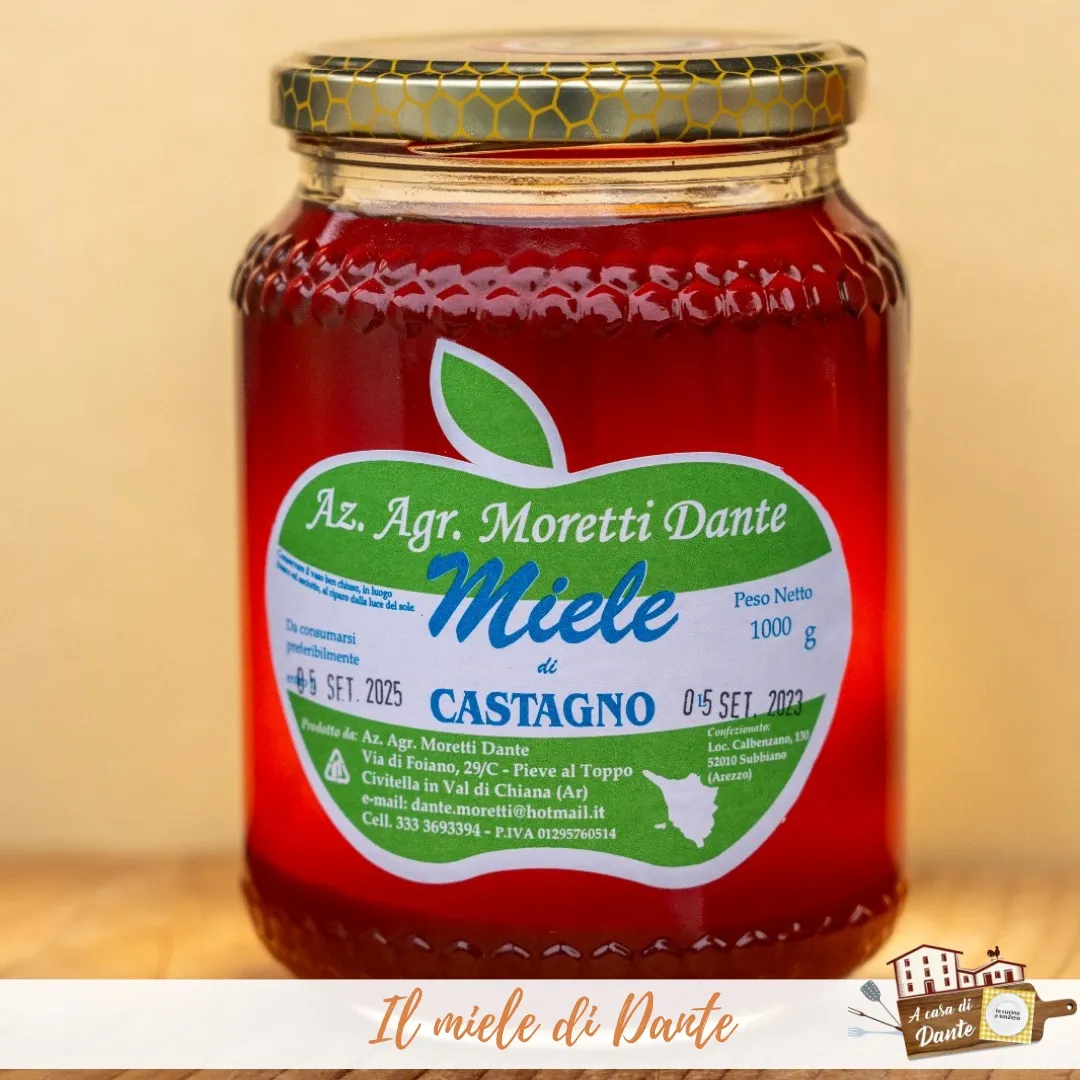
Saying "honey" is like saying "wine": it means almost nothing until you say which. Between an acacia and a chestnut there is the same distance as between a light white and a wine for contemplation — same product, entirely different uses.
There are five here. We line them up from the most delicate to the most decided, which is the order worth tasting them in.
Acacia — the lightest
Very pale, almost clear, liquid for a long time. The flavour is clean and unassertive: it sweetens without leaving a signature.
Use it when you do not want the honey to be noticed: in tea, in a herbal infusion, in plain yoghurt. It is also the honey for people who say they do not like honey, because it lacks the aftertaste many find cloying.
Sunflower — the golden one
Full yellow, floral on the nose, inclined to crystallise into a fine cream. It comes from the sunflower fields that cover the Valdichiana in summer.
For spreading. On bread, on a rusk, into yoghurt. It is the breakfast honey par excellence, precisely because crystallising makes it easy to spread.
Wildflower — the changeable one
It is never twice the same: it depends on what was in bloom while the bees were working. Colour and flavour shift from year to year, and that is exactly its merit.
The all-rounder. Puddings, hot drinks, fresh cheeses. If you are keeping only one in the house, keep this.
Chestnut — the bitter one
Dark, dense, with a clear bitter finish that divides opinion. It smells of woodland. Those who love it do not go back; those who do not find it too much straight away.
On aged cheeses. This is where it is at its best: aged Tuscan pecorino, a blue, a shard of parmesan. The bitterness cuts the fat and the salt.
Honeydew — the unusual one
Almost black, very dense, barely sweet. It does not come from flower nectar but from honeydew, the sugary substance certain insects leave on leaves and which the bees collect. The flavour recalls malt and caramel.
Try it on its own first, a teaspoon, to understand what it is. Then on a serious cheese, or in a dessert that needs depth.
How to taste them
If you want to compare several, go from pale to dark: chestnut after acacia comes through perfectly, acacia after chestnut does not come through at all. A teaspoon, at room temperature, with no bread in between.
If it crystallises
That is not a fault, it is the opposite: crystallising is the natural behaviour of a honey that has not been treated. To bring it back to liquid, a warm bain-marie is enough, never above 40 degrees and never the microwave.
The five honeys come from Azienda Agricola Moretti Dante, from the same hills where the aglione grows.