Ribollita and cavolo nero: the Tuscan country winter
Ribollita is called that because it is re-boiled. It is not a poetic name: it describes the method literally. You make a soup of vegetables and beans, you leave it overnight, and the next day you put it back on the heat with stale bread in it. That second cooking is what makes it ribollita.
Before that it is only a soup.
Why it exists
Tuscan country cooking could not afford to throw things away. Unsalted Tuscan bread goes hard quickly and becomes inedible on its own, but inside a hot soup it comes back and thickens everything. The beans gave substance, the garden gave the rest.
A dish invented to avoid waste has ended up on restaurant menus. That happens often in Tuscany.
Cavolo nero, which is not a detail
Without cavolo nero it is not ribollita. It is a long-leaved, blistered, very dark green cabbage, typical of Tuscany, and it has one property that matters here: it improves after the first frosts. The cold takes the bitterness out and brings forward an underlying sweetness.
That is why ribollita is a winter dish and not a September one. Make it in October with young cabbage and you get something harder and more bitter.
How to serve it
Not piping hot. Ribollita should be served warm, because at too high a temperature the flavours flatten out.
On top, two things and no more: a thread of raw extra virgin olive oil, generously, and black pepper. In some areas thinly sliced raw red onion is added, giving crunch and a sharp bite. That is a legitimate variation, not a mistake.
The spoon should stand up in it. If the ribollita is liquid it is not ready: back on the heat until the bread has done its work.
The two ways to have it
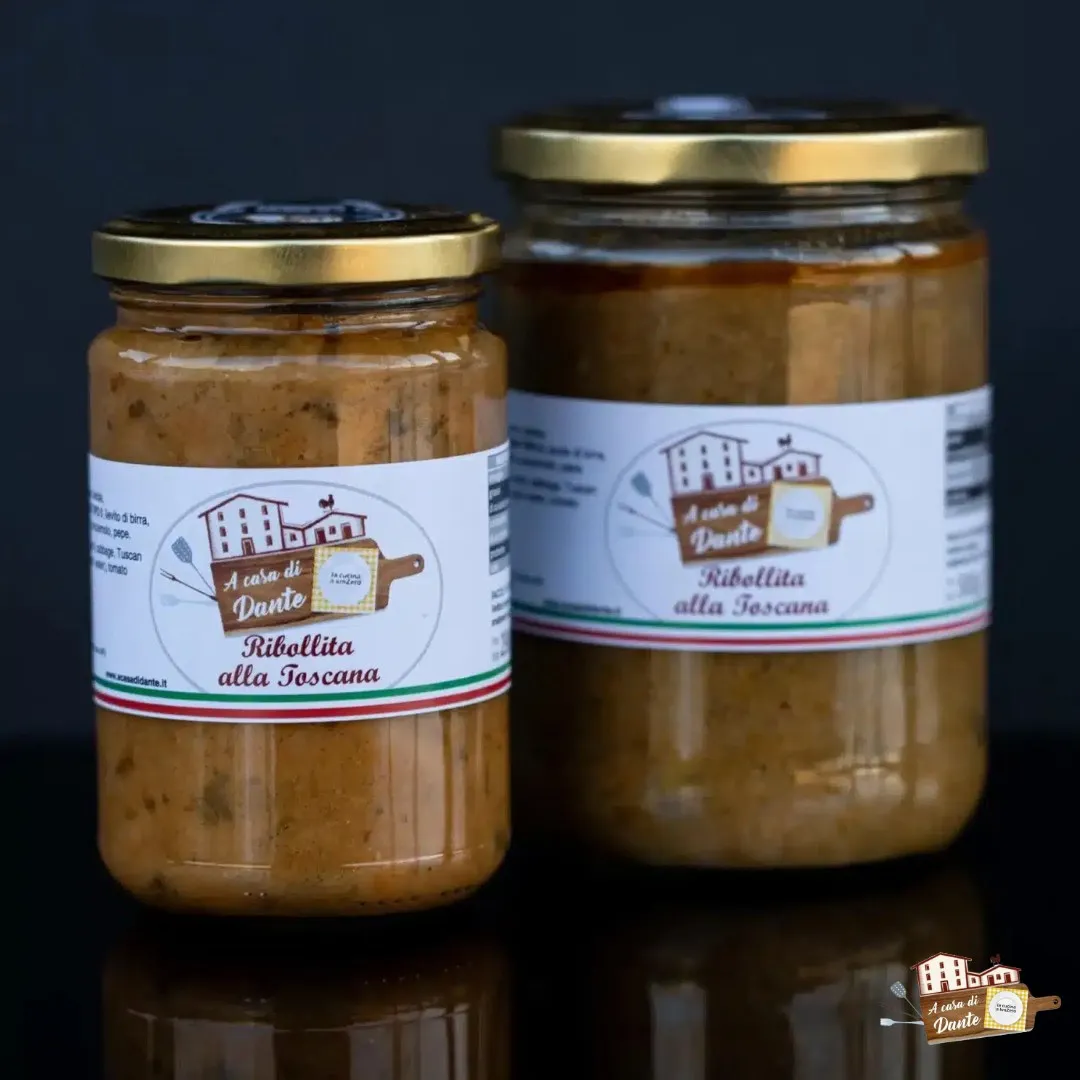
Making it from scratch takes two days, and rightly so. When there is no time, Ribollita alla Toscana in a jar is the same recipe, already re-boiled: warm it gently, finish with raw oil, bring it to the table.
Cavolo Nero with Beans is its close, drier relative: cavolo nero, beans, passata, extra virgin olive oil, salt and garlic. Use it as a side dish, on crostini, or as a base to build your own soup.
A note on the bread
If you make it at home, use unsalted Tuscan bread and really stale — two or three days old. Fresh bread dissolves into mush; salted bread unbalances the whole dish. It is one of those cases where the poor ingredient cannot be replaced by a better one.